YouTube Strategy
YouTube for B2B: How Businesses Use the Platform to Generate Leads
B2B businesses do not need millions of views to get results from YouTube. Here is how the platform builds trust, drives leads, and keeps you top of mind with buyers.
By Crescivo Team • July 14, 2026 • 9 min read
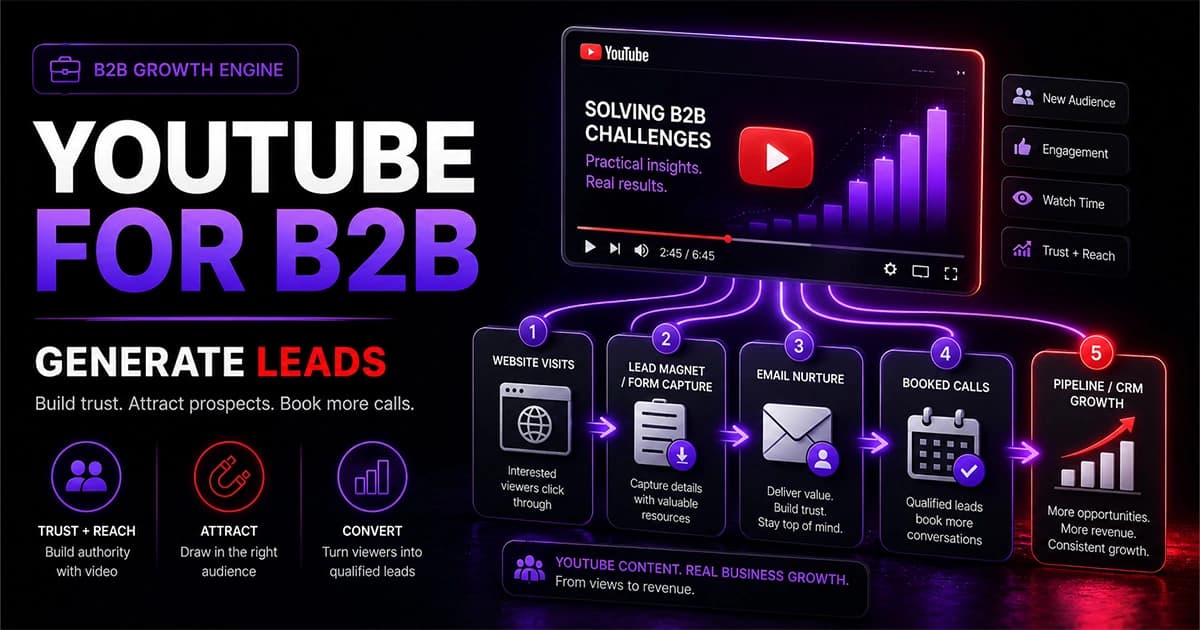
Table of contents
B2B businesses approach YouTube differently from creators chasing ad revenue, and that changes what success looks like. You do not need 1,000 subscribers, 4,000 hours of watch time, or millions of views to get a return from the platform. You need the right people to find you, trust you, and remember you when they are ready to buy.
That is what YouTube for B2B is built around: discovery, trust, and staying top of mind.
Find Your Biggest YouTube Bottleneck
Most creators guess what to fix. Run the free Channel Bottleneck Calculator and discover the one metric holding back your growth.
Run Free AnalysisWhy YouTube works differently for B2B
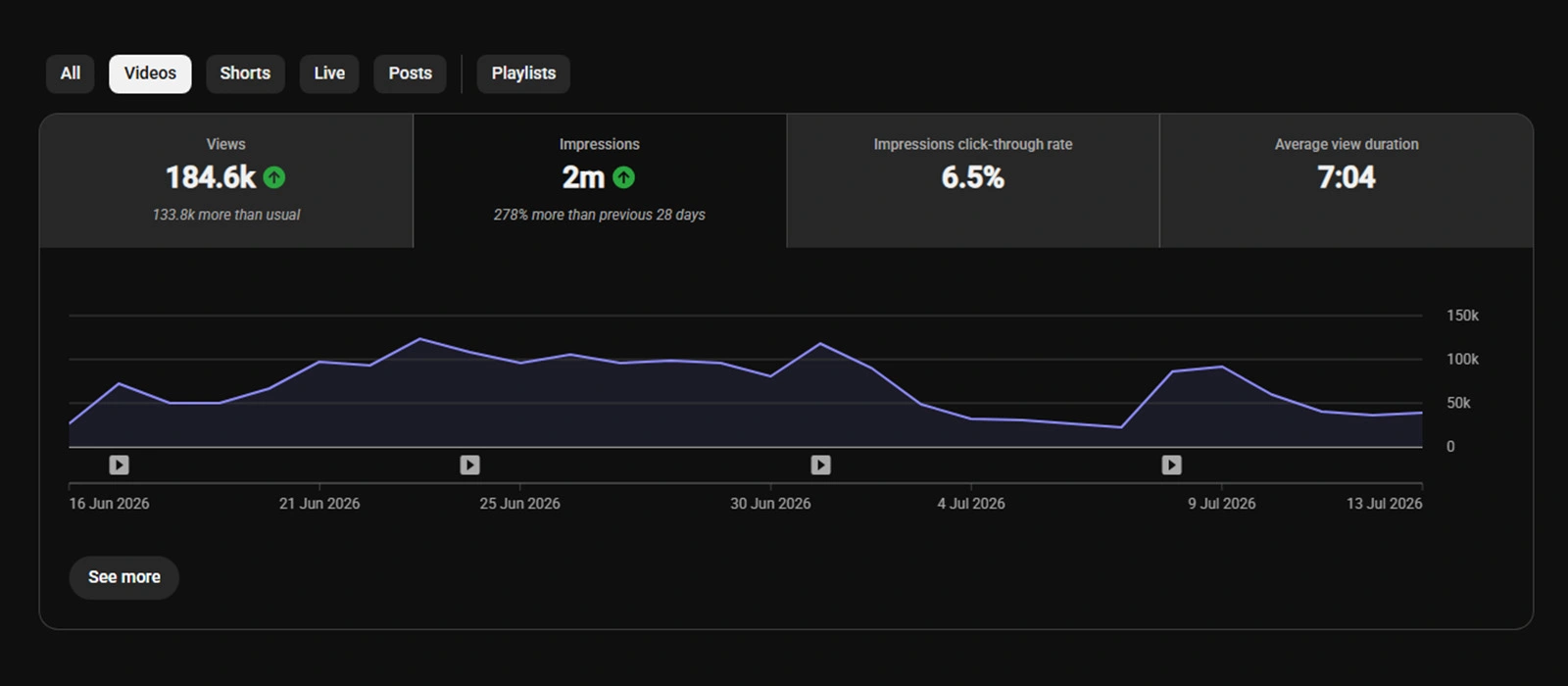
Ad revenue on YouTube requires 1,000 subscribers and 4,000 hours of watch time just to qualify, and only about 8% of channels ever reach 1,000 subscribers. For a business owner using YouTube to generate leads and close clients, those numbers are largely irrelevant. A service business with 200 subscribers and 15 well-targeted videos can generate more revenue from the platform than a creator with 50,000 subscribers and ad revenue of a few hundred dollars a month.
The mechanism is different. For B2B, YouTube is not a monetisation platform. It is a trust platform.
A potential client who finds your video through search, watches five minutes of you explaining a problem they are dealing with, and then sees more videos on your channel covering related topics has effectively had multiple interactions with you before they ever book a call. By the time they reach out, you are not a stranger. You are someone they have already spent time with and decided to trust.

How B2B YouTube generates leads
The lead generation process on YouTube follows the same bottleneck sequence as any other channel, but the conversion metric at the end is different.
Instead of tracking ad revenue or merchandise sales, B2B businesses track:
- How many viewers click the link in the video description
- How many of those visitors opt in on the landing page
- How many of those opt-ins book a call
- How many of those calls convert to clients
Each of these is a stage in the funnel, and each one can be measured and improved. If the link in your description gets very few clicks, the call to action in the video needs work. If people click but do not opt in, the landing page is the problem. If people book calls but do not convert, the sales conversation is the bottleneck. YouTube brings people into the top of that funnel. The rest of the funnel determines what happens to them.
The role of trust in B2B YouTube
Trust is what separates B2B YouTube from most other marketing channels. A talking-head video where someone sees your face, hears your voice, and watches you walk through a problem they have been trying to solve creates a level of credibility that a LinkedIn post or email cannot replicate on its own.
This matters because B2B purchasing decisions are almost never impulsive. A business owner looking for a service provider is evaluating multiple options, often over weeks or months. The businesses that stay top of mind throughout that process are the ones most likely to get the call when the buyer is finally ready to move.
Consistent YouTube content keeps you visible during that evaluation window without requiring you to be active in every conversation. The videos are there doing that work whether you are recording new content or not.
YouTube does not work alone for B2B
YouTube is most effective for B2B when it connects to the other places where your potential clients are already paying attention.
The most reliable setup is to use your videos as the content engine and distribute them across every channel you own. A completed video becomes a newsletter linking back to it. The transcript becomes LinkedIn posts. The key points become short-form content across whichever platforms your audience uses. Each piece of content from that video points people back to your YouTube channel or your landing page.
This creates a loop where your email list, LinkedIn presence, and blog are all circulating views back to your videos, and your videos are bringing new people into your email list and landing page. Each channel reinforces the others rather than competing with them.
YouTube and AI discoverability
One increasingly relevant benefit of YouTube for B2B is discoverability through AI tools. Videos indexed on YouTube, along with the transcripts and descriptions attached to them, are increasingly surfaced by AI-powered search tools when someone asks a question relevant to your topic.
A well-optimised YouTube video on a specific B2B problem can now show up not only in YouTube search and Google search but also in AI-generated answers to the questions your potential clients are typing. That is an additional distribution channel that did not exist a few years ago and is still being under-used by most businesses.
The same bottleneck process applies
Running YouTube for B2B does not require a different channel strategy. The same five stages still apply.
You still need impressions, meaning YouTube has to show your videos to the right people. You still need a strong enough title and thumbnail combination to get clicks. You still need retention that keeps viewers watching long enough to build trust and hear your call to action. And you still need a clear conversion path from the video to whatever comes next.
The difference is only in how you define conversion. For a creator, conversion is subscribers and watch time. For a B2B business, conversion is opt-ins, booked calls, and closed clients.
What type of content works for B2B YouTube
Talking-head videos work consistently well for B2B because they put a face and a voice to the business in the most direct way. Production does not need to be complicated. A clean background, decent lighting, and clear audio is enough.
The content that generates leads tends to be built around the problems your ideal clients are actively searching for. If your clients struggle with a specific challenge, a video that clearly explains that challenge and offers a way forward positions you as someone who understands their situation. That is what drives both discovery through search and conversion into leads.
Find your YouTube bottleneck
Run the free Crescivo Bottleneck Calculator to find out exactly where your channel is losing momentum and what to fix first.
Get Started FreeFAQ
How does YouTube work for B2B lead generation?+
B2B businesses use YouTube to build trust with potential clients through consistent video content. Viewers find videos through search or recommendations, watch enough to trust the business, and then take action through a link in the description. The conversion path is typically: video view, landing page visit, opt-in, booked call, closed client.
How many subscribers do you need on YouTube for B2B?+
There is no minimum. B2B lead generation does not depend on subscriber count the way ad revenue does. A channel with a few hundred subscribers and well-targeted videos on the right topics can generate consistent leads. What matters is whether the right people are finding the videos and whether those videos build enough trust to drive action.
What type of YouTube videos work best for B2B?+
Talking-head videos built around specific problems your potential clients are searching for tend to work best. They put a face to the business, build trust over multiple views, and can rank in YouTube search for the topics your audience cares about. Simple production is fine. Clear audio, a clean background, and useful content is the priority.
How do you track leads from YouTube for B2B?+
Track the link in your video description to your landing page. From there, measure how many visitors opt in, how many opt-ins book a call, and how many calls close. Each of those stages is a separate conversion metric. If any one of them is low, that is the part of the funnel to improve first.
Should B2B businesses post YouTube Shorts?+
Long-form videos should be the priority for B2B because they build more trust per view and include a clickable description link. Shorts can complement the main content, but they do not support clickable links, which limits their effectiveness as a direct lead generation tool. Focus on long-form first and add Shorts as a supplement.
How does YouTube help B2B businesses stay top of mind?+
Consistent YouTube content keeps you visible during the window when a potential client is evaluating options, which in B2B can stretch over weeks or months. A buyer who has watched several of your videos has already spent time with you before they reach out. That familiarity shortens the trust-building process and makes it more likely they choose you when they are ready to act.
What to do next
Start with the problems your potential clients are already searching for on YouTube. Build videos around those topics, include a clear call to action in each one, and connect your videos to your email list and other distribution channels so the views compound over time.
Find Your Biggest YouTube Bottleneck
Most creators guess what to fix. Run the free Channel Bottleneck Calculator and discover the one metric holding back your growth.
Run Free AnalysisRelated Articles
More guides to help you diagnose and improve your YouTube growth.
YouTube Strategy
How Often Should You Post on YouTube?
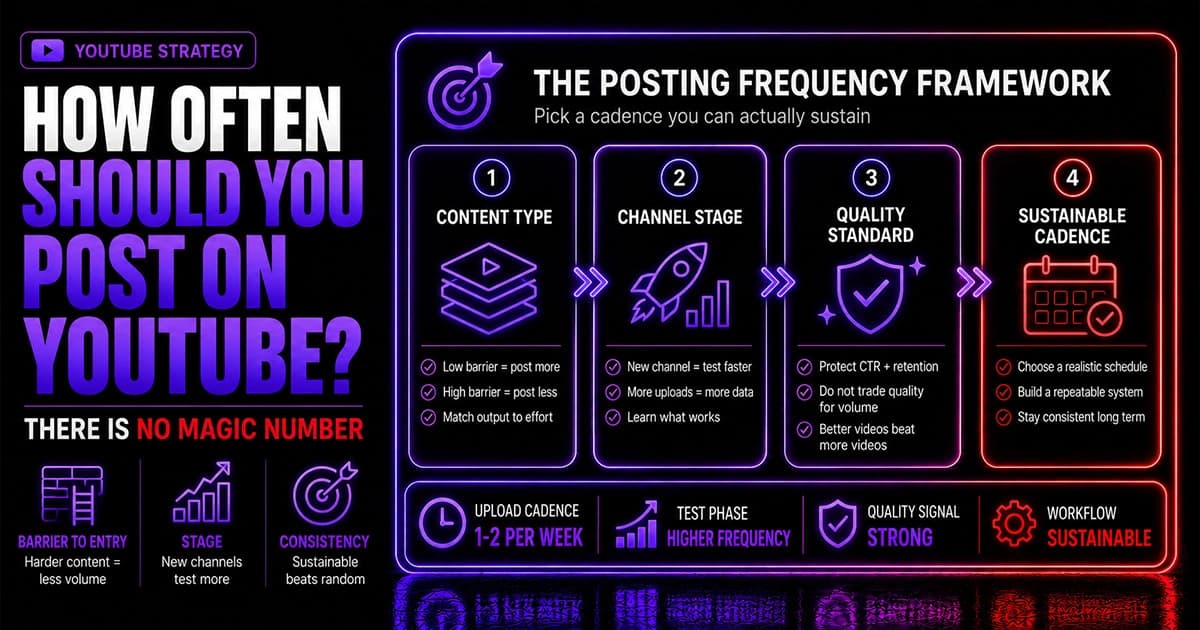
There is no magic number for YouTube posting frequency. Here is the framework that actually determines how often you should upload.
YouTube Strategy
How to Turn One YouTube Video Into Content for Every Platform
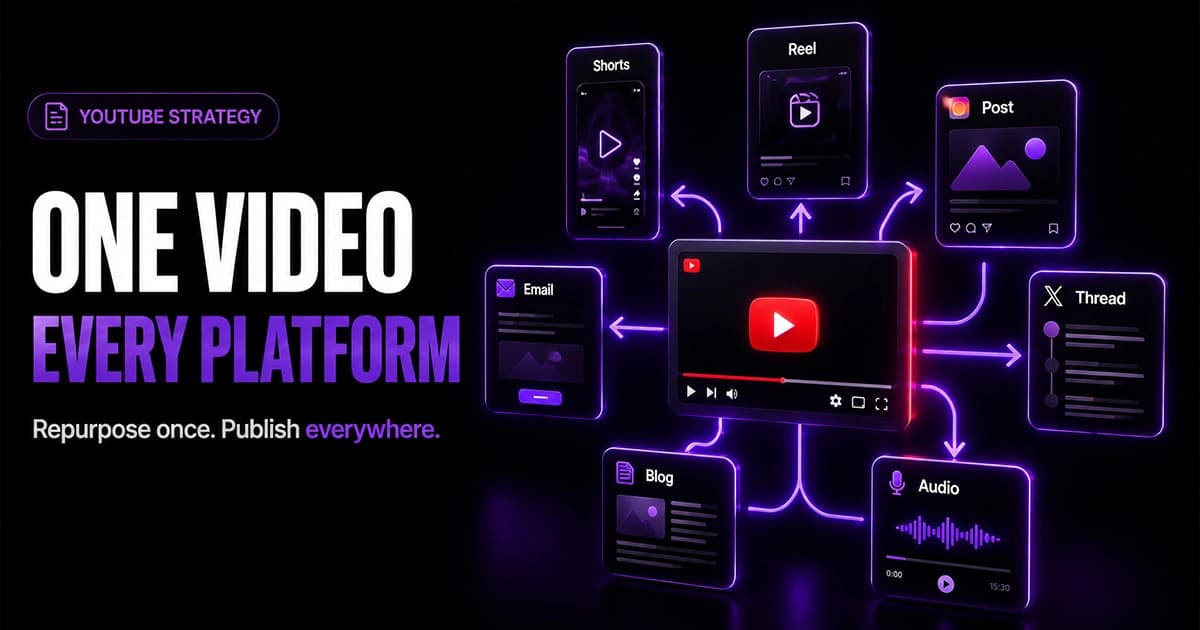
YouTube is the hardest platform to create for, but it gives you the most leverage. Here is how to repurpose one YouTube video into content across every other platform.
YouTube Strategy
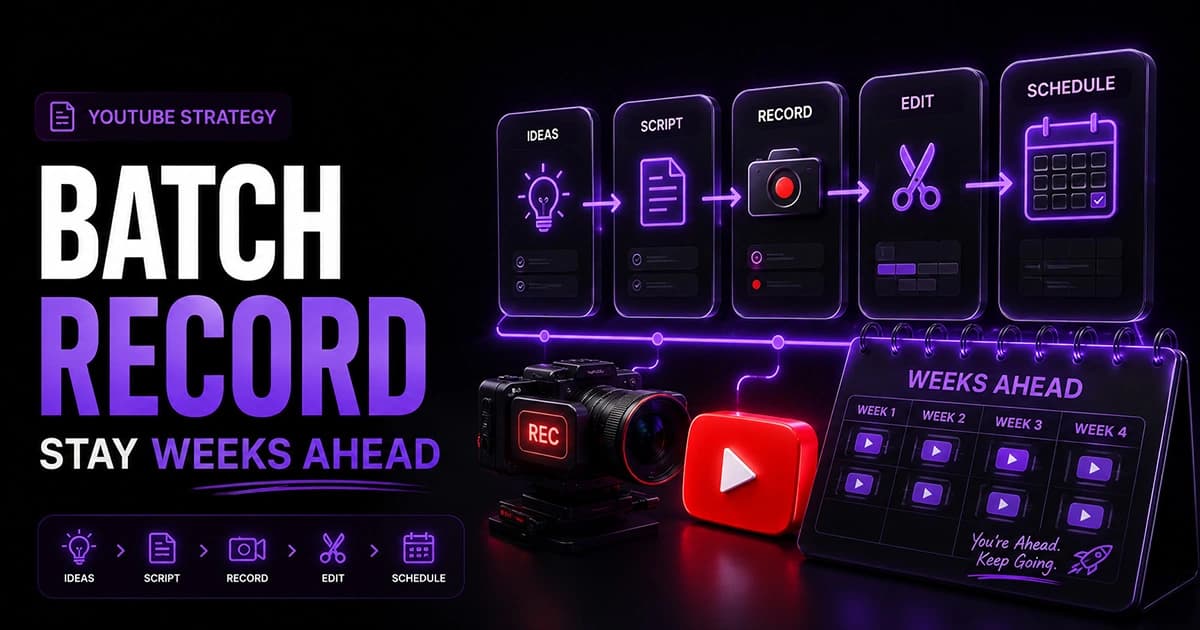
How to Batch Record YouTube Videos (And Stay Weeks Ahead)
Batch recording YouTube videos is not just about saving time. It is about removing the weekly grind. Here is the production system that keeps you consistently ahead.
Find Your Biggest YouTube Bottleneck
Most creators guess what to fix. Run the free Channel Bottleneck Calculator and discover the one metric holding back your growth.
Run Free Analysis