YouTube Strategy
How to Batch Record YouTube Videos (And Stay Weeks Ahead)
Batch recording YouTube videos is not just about saving time. It is about removing the weekly grind. Here is the production system that keeps you consistently ahead.
By Crescivo Team • July 9, 2026 • 8 min read
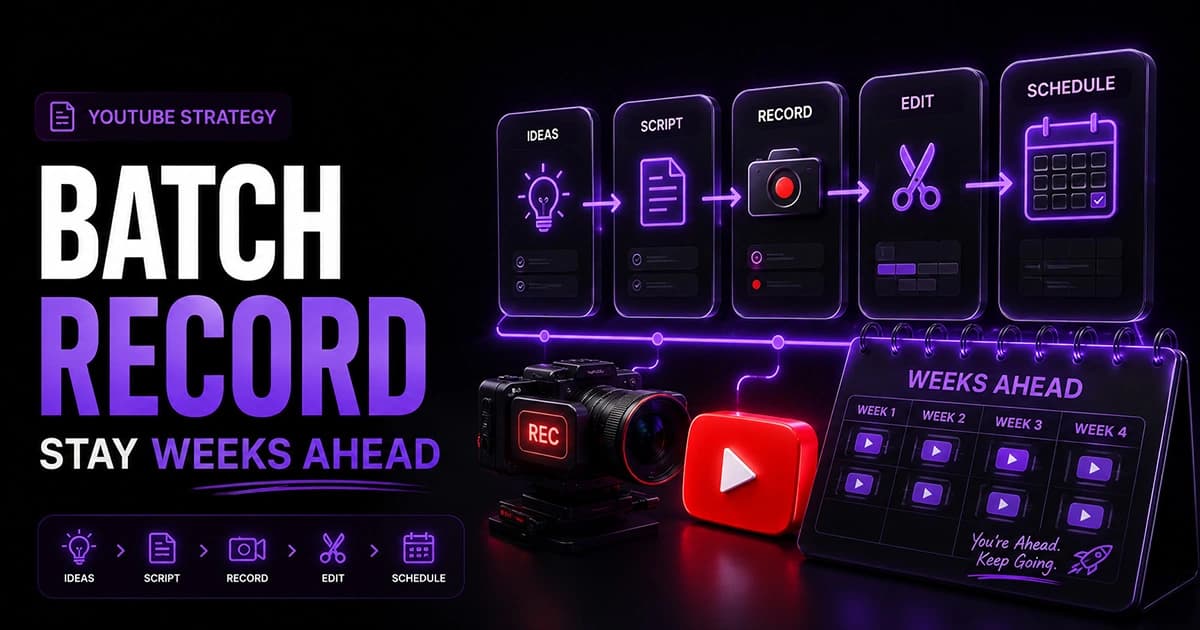
Table of contents
If you are producing one YouTube video at a time from idea to upload, the process feels longer than it has to be. By the time a video is done, the thought of doing it all over again next week is already draining. That cycle is the problem, and batch recording YouTube videos is how you break it.
This is the system we have used to help hundreds of creators get ahead and stay there.
Find Your Biggest YouTube Bottleneck
Most creators guess what to fix. Run the free Channel Bottleneck Calculator and discover the one metric holding back your growth.
Run Free AnalysisWhy one video at a time does not work
When you produce a single video from start to finish, you are constantly switching between completely different types of tasks. You come up with an idea, plan the thumbnail, optimise the metadata, write the script, record, edit, review, revise, and upload, all for one video, and then you do it again.
Each of those stages uses a different part of your brain. Some you enjoy, some you do not. The ones you do not enjoy are where procrastination kicks in, where you start overthinking, where you find yourself putting it off. By the time the video is done it might be ten to twenty hours later, and it just feels like a drag.
The fix is not to work harder. It is to stop switching.
Batch by stage, not by video
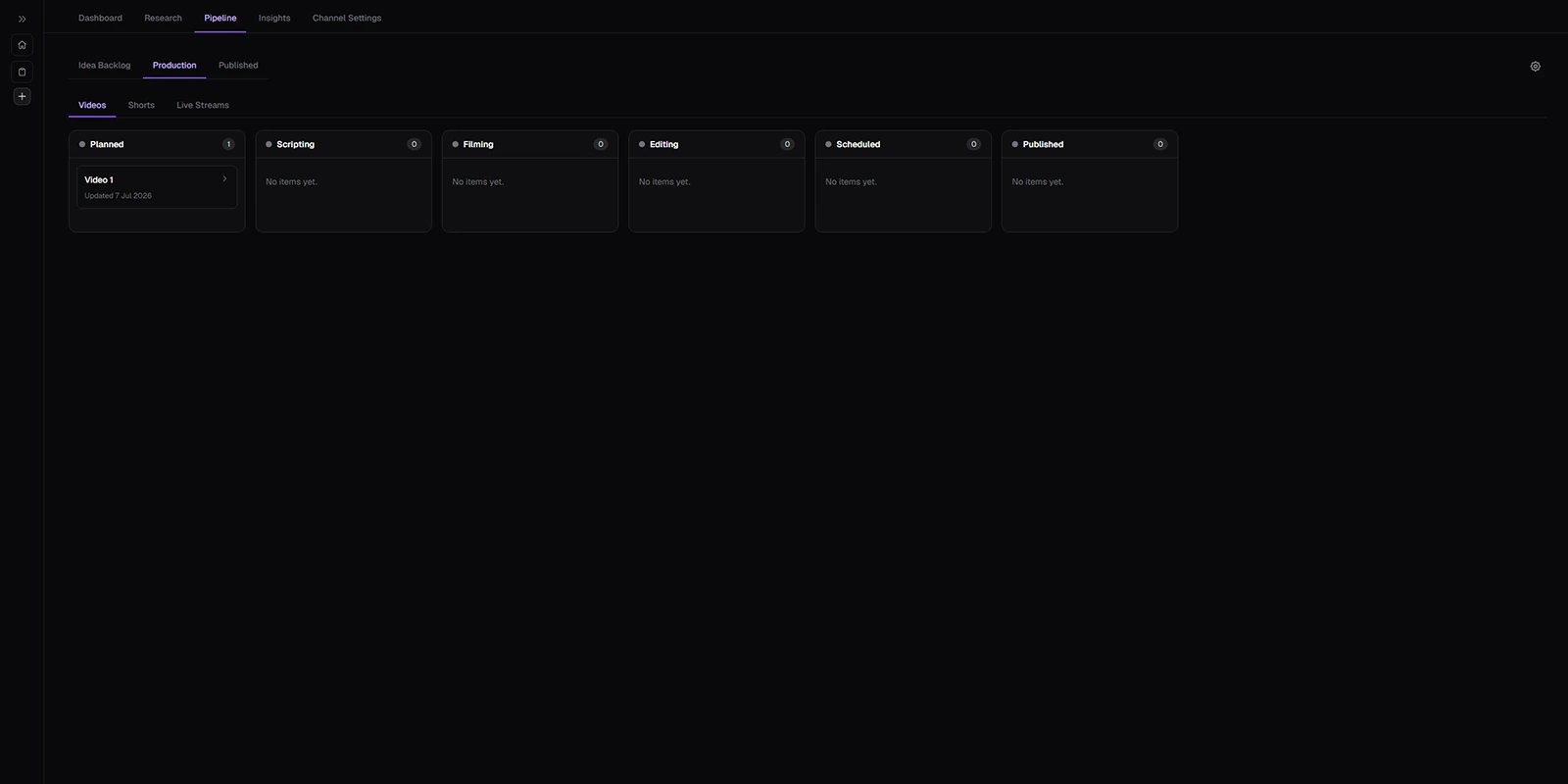
The principle behind batch recording is straightforward. Instead of taking one video through every stage of production, you take ten videos through the same stage at the same time.
You spend one session coming up with ideas for ten videos. Another session planning thumbnails for ten videos. Another writing scripts for ten videos. Then you record ten videos in a single session, edit ten, review ten, and upload ten.
When you are doing the same type of task repeatedly, you get into a flow with it. You get faster. The mental overhead of switching disappears. What felt like ten to twenty hours per video starts to compress significantly because you are not starting from scratch every time you move to a new stage.
Start with the idea backlog
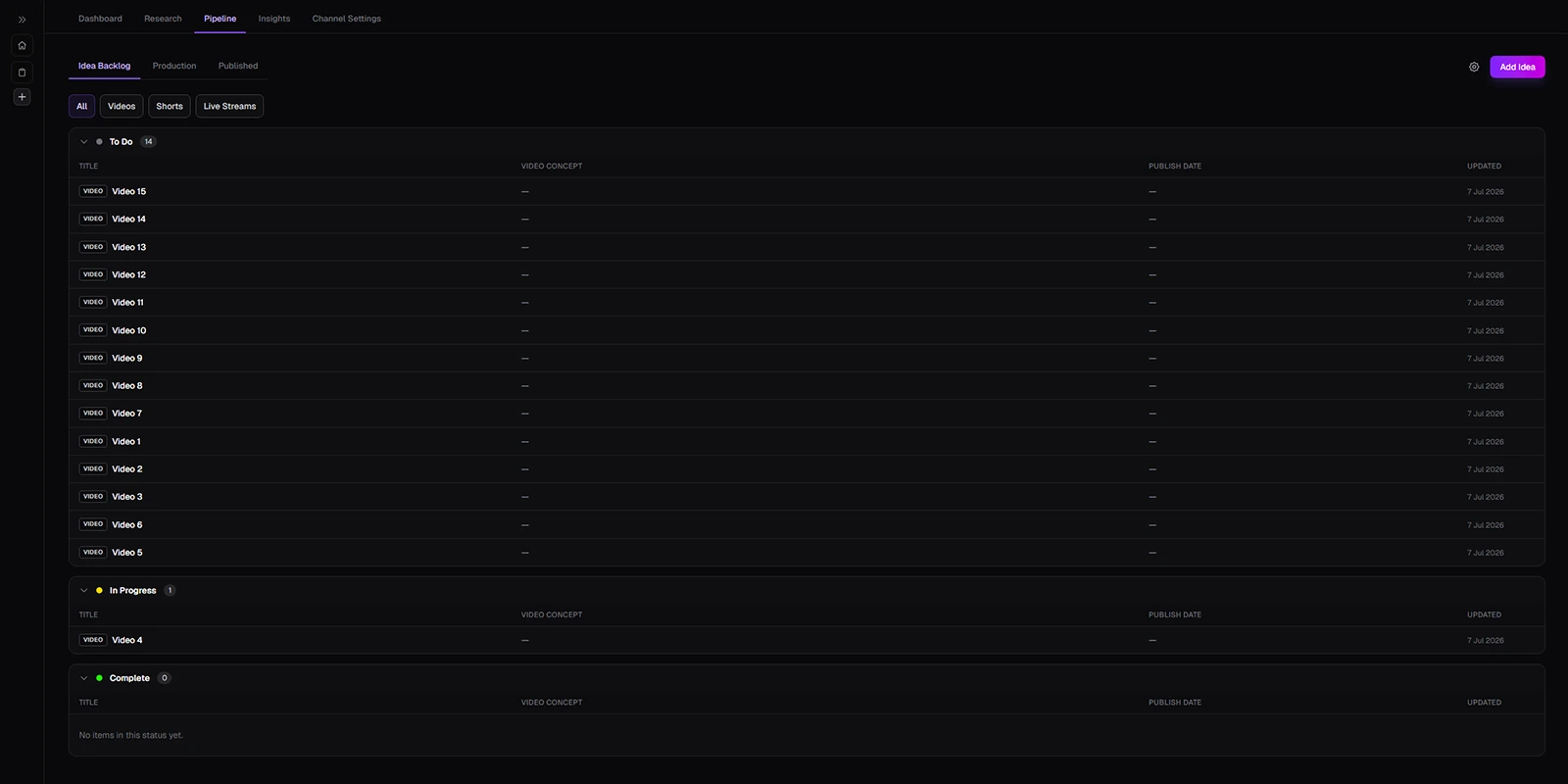
Ideas are the easiest part of the pipeline, and the one place where you should never be running low. Coming up with video ideas is far easier than recording them, so the goal is to build a backlog that stays well ahead of your production schedule.
The target is not just ten ideas. Over time, a well-maintained idea backlog should have hundreds of options, each with a priority score so you can quickly identify which ones are worth moving forward on. When it is time to record, you are not sitting down to figure out what to make. You already know.
The production pipeline
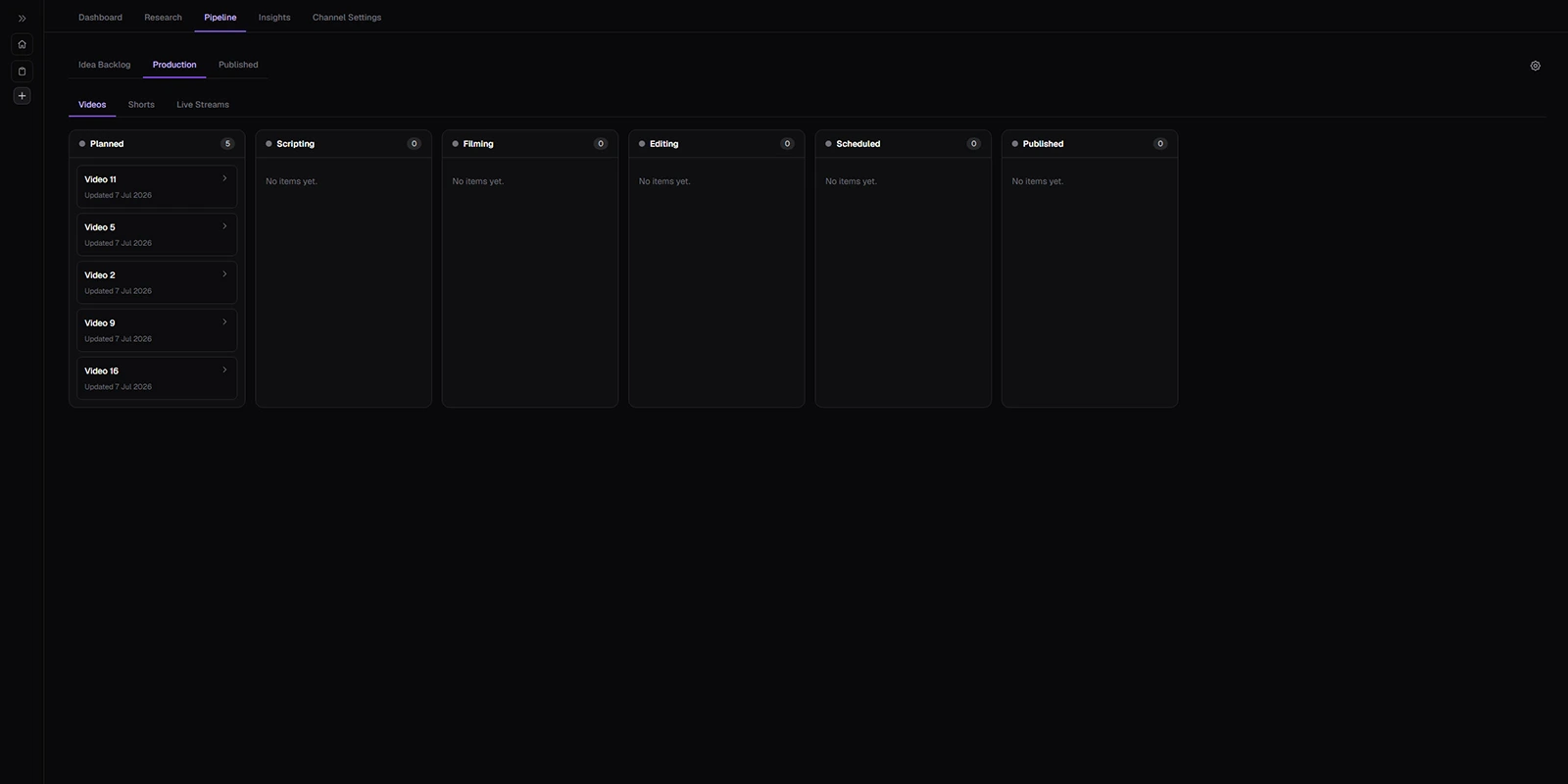
Once ideas are prioritised and ready to move, they go into the production pipeline. Each stage becomes its own batch session.
The stages typically look like this:
- Ideas — select the videos you are moving forward on
- Thumbnails — plan and create the thumbnail concept for each
- Optimisation — titles, descriptions, tags, and keyword research
- Scripts — write or outline the content for each video
- Recording — film all videos in one session
- Editing — edit all videos
- Review — watch back and make revisions
- Upload — schedule and publish
You do not have to do all of these in a single day, but the goal is to complete each stage across all videos in your current batch before moving to the next. That is what removes the context switching.
Crescivo is built specifically for this workflow. The production pipeline inside Crescivo tracks every video through each stage, keeps everything in one place, and removes the need to jump between different tools and spreadsheets to manage where things are.
How far ahead to get
Ten videos is a good working number, but the right batch size depends on how often you publish. If you publish once a week and want to get a full month ahead, you only need four or five videos to get there.
Once you are ahead, the recording commitment drops significantly. Some creators we work with record once every couple of weeks. Others record once a month. Some go further: they will record twenty to thirty videos in a single day, then spend the next three to six months editing, publishing, and monitoring performance before they record again.
The common thread is that none of them are starting from scratch every week.
How to get ahead when starting a new channel
The hardest part of batch recording is getting ahead for the first time, especially when you are starting from zero.
The approach that works is to delay your first publish date. When you start a new channel, do not try to publish in week one. Use that time to get your systems set up, build your idea backlog, and work through your first batch of recordings. Give yourself two to four weeks to get ahead before anything goes live.
Once you publish your first video, you already have the next several ready. From that point, you can stay ahead by running a new batch before your current buffer runs out, usually around two weeks before your scheduled content runs dry.
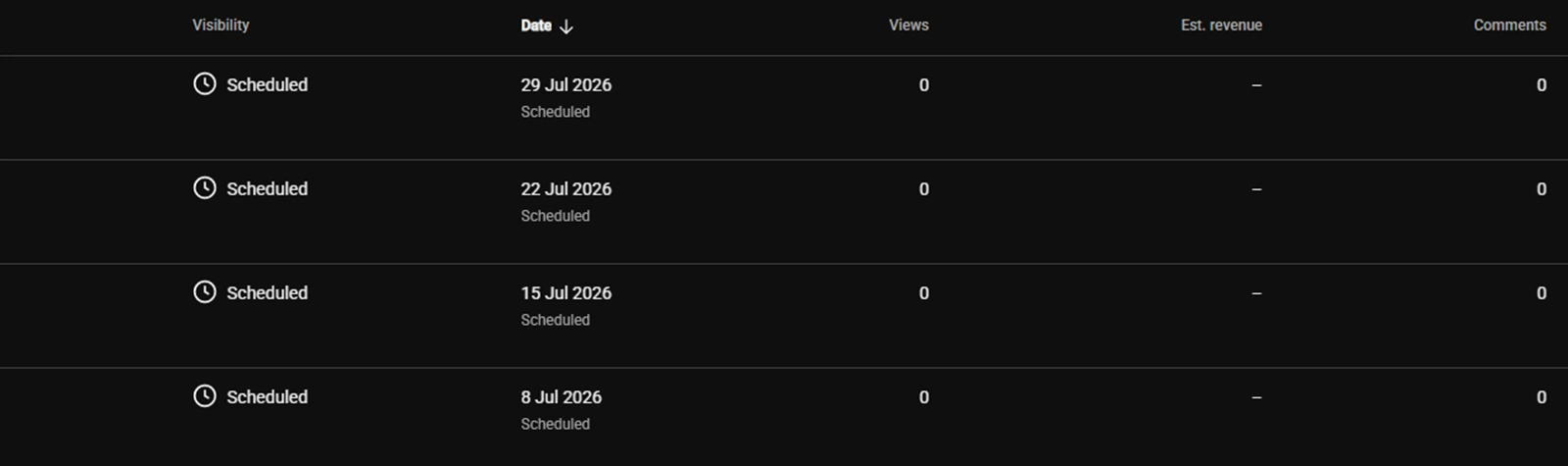
That two-week window is the signal to start planning and recording the next batch. By the time those videos need to go live, they are already done.
Build your production pipeline with Crescivo
Manage your idea backlog, batch your production stages, and stay weeks ahead with a system built for YouTube creators.
Get Started FreeFAQ
What does batch recording YouTube videos mean?+
Batch recording means grouping the same stage of production across multiple videos rather than taking one video from idea to upload at a time. You do all your scripting together, all your recording together, and all your editing together, which reduces context switching and speeds up each stage.
How many videos should I batch record at once?+
Ten is a practical number to aim for, but it depends on your publishing schedule. If you post once a week and want a month of buffer, four or five videos is enough to get there. Some creators batch record twenty to thirty videos in a single day and work from that content for three to six months.
How do I get ahead on YouTube videos?+
Start by building an idea backlog before you record anything. Then work through your production stages as batches rather than one video at a time. When starting a new channel, delay your first publish by two to four weeks so you have a buffer already in place before you go live.
How do I manage a YouTube production pipeline?+
A production pipeline tracks each video through every stage of production, from idea through to upload. Crescivo is built specifically for this, letting you manage your idea backlog and production stages in one place without jumping between different tools.
How often should I record YouTube videos if I batch record?+
It depends on how large your batches are and how often you publish. With a healthy batch system in place, recording once every few weeks or once a month is enough for most creators. The goal is to record before your current buffer runs out, not on a fixed weekly schedule.
When should I start planning the next batch of YouTube videos?+
Around two weeks before your scheduled content is due to run out. That gives you enough time to go through the full production pipeline before you need the videos to go live.
What to do next
Set up your production pipeline and build your idea backlog before you record anything. Getting ahead is the hardest part. Once you are there, the whole process gets easier and the weekly pressure to produce disappears.
Find Your Biggest YouTube Bottleneck
Most creators guess what to fix. Run the free Channel Bottleneck Calculator and discover the one metric holding back your growth.
Run Free AnalysisRelated Articles
More guides to help you diagnose and improve your YouTube growth.

YouTube Strategy
How to Turn One YouTube Video Into Content for Every Platform
YouTube is the hardest platform to create for, but it gives you the most leverage. Here is how to repurpose one YouTube video into content across every other platform.
YouTube Growth
How to Get Your First 100 YouTube Subscribers
Getting your first 100 YouTube subscribers puts you in the top 25% of all channels. Here is how to get there through search, discovery, and the right content strategy.
YouTube Strategy
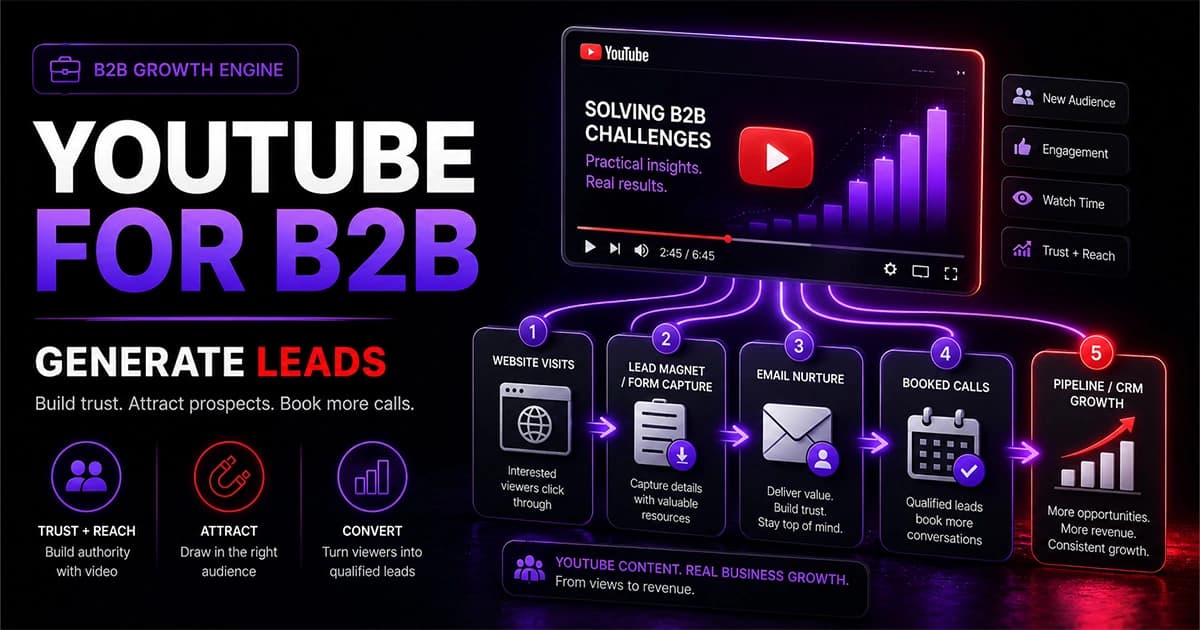
YouTube for B2B: How Businesses Use the Platform to Generate Leads
B2B businesses do not need millions of views to get results from YouTube. Here is how the platform builds trust, drives leads, and keeps you top of mind with buyers.
Find Your Biggest YouTube Bottleneck
Most creators guess what to fix. Run the free Channel Bottleneck Calculator and discover the one metric holding back your growth.
Run Free Analysis