YouTube Growth
Why Your YouTube Videos Are Not Getting Views
Learn why your YouTube videos are not getting views and how to find the real bottleneck. Fix impressions, CTR, or both to start growing your channel.
By Crescivo Team • June 17, 2026 • 7 min read
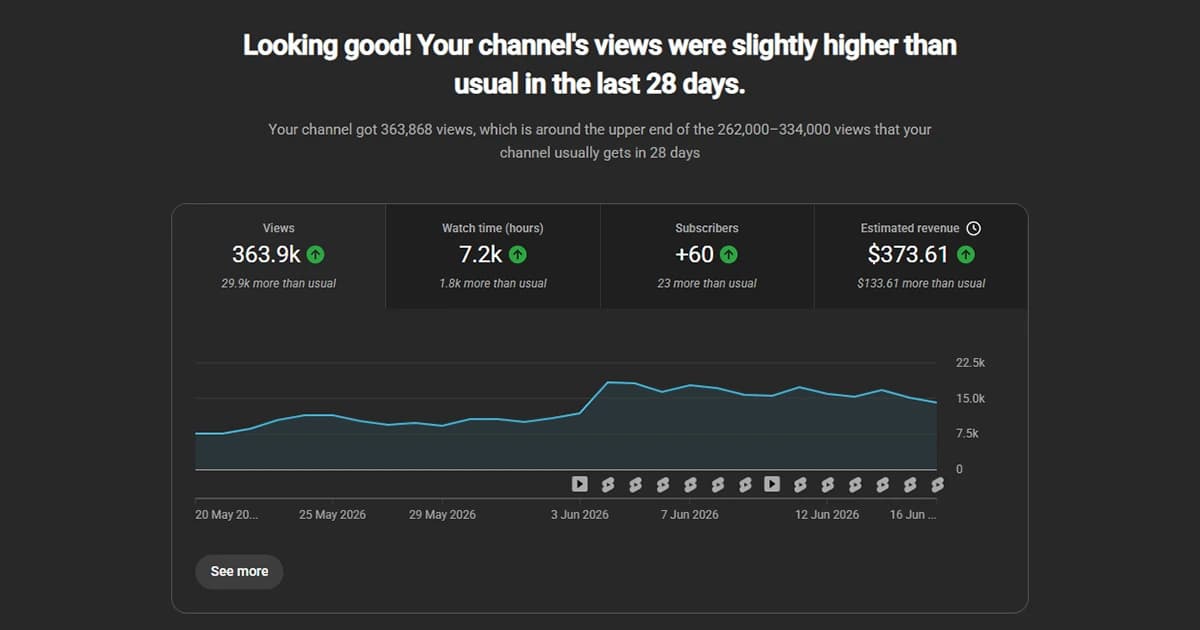
Table of contents
If your YouTube videos are not getting views, the problem is almost never your content quality. Views are the result of a process, and if the earlier steps are broken, views stay low no matter what you upload.
A lot of creators focus on views first and get stuck. The problem is that views is what everyone wants, but it is not the first thing that shows up when your channel is actually growing. This is the right way to look at it.
Why your YouTube videos are not getting views
Views come after two other things happen first: impressions and click-through rate.
Here is how the process works:
- YouTube shows your video to people (impressions)
- People click on it (click-through rate)
- People watch it (views)
If you are not getting views, one of those first two steps is weak. That is where you need to focus.
Find Your Biggest YouTube Bottleneck
Most creators guess what to fix. Run the free Channel Bottleneck Calculator and discover the one metric holding back your growth.
Run Free AnalysisWhat are impressions on YouTube?
Impressions are the total number of times YouTube showed your thumbnail to someone. Every time your video appeared in search results, on the home feed, or in the suggested panel, that is one impression.
Impressions are not the same as views. When someone sees your thumbnail and keeps scrolling, that still counts as an impression, because it just means YouTube gave your video a chance to be seen, not that anyone actually watched it.
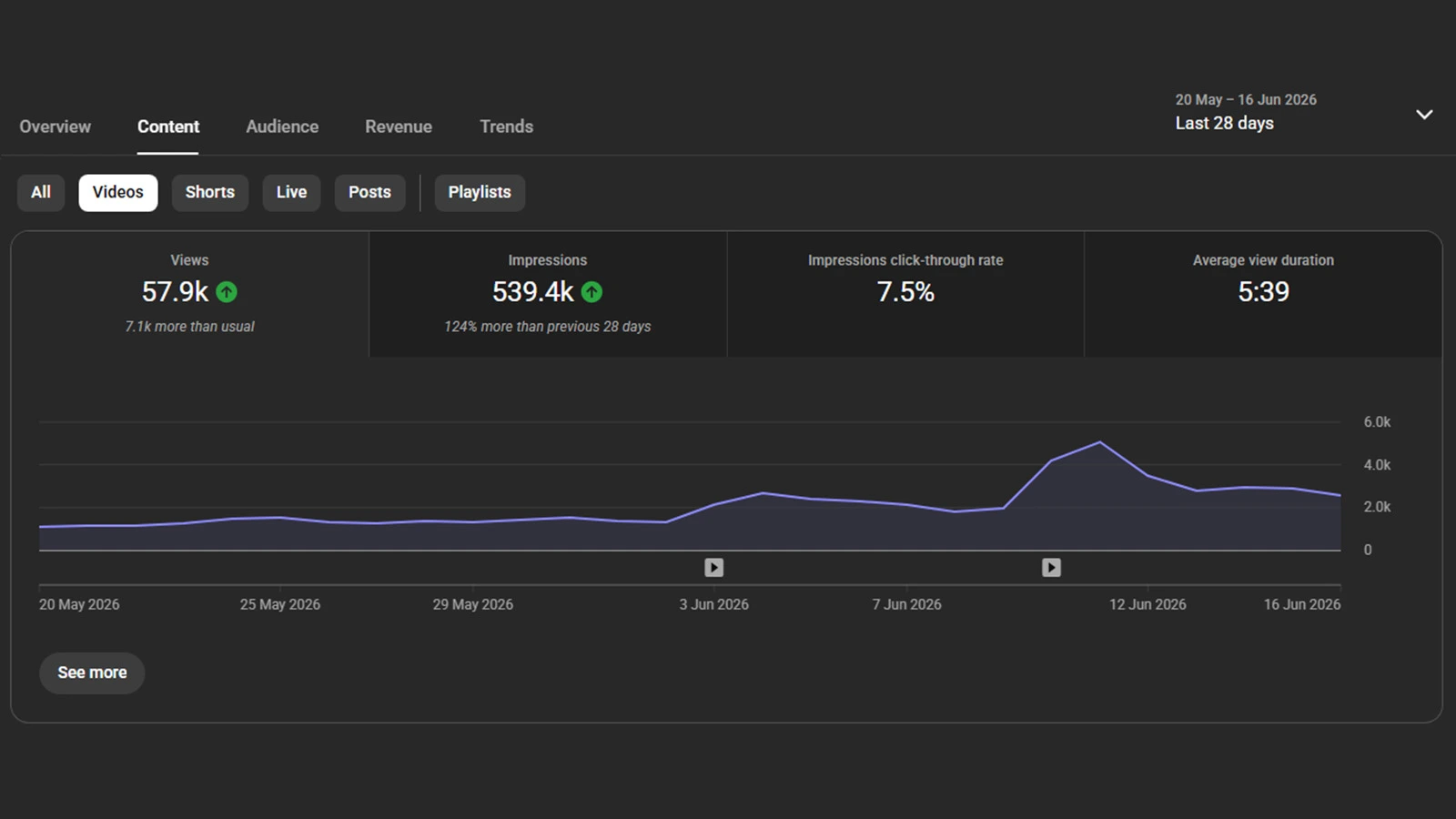
You can find your impressions inside YouTube Studio. Go to Analytics, then Content, then select Videos. You will see your total impressions for the selected time period.
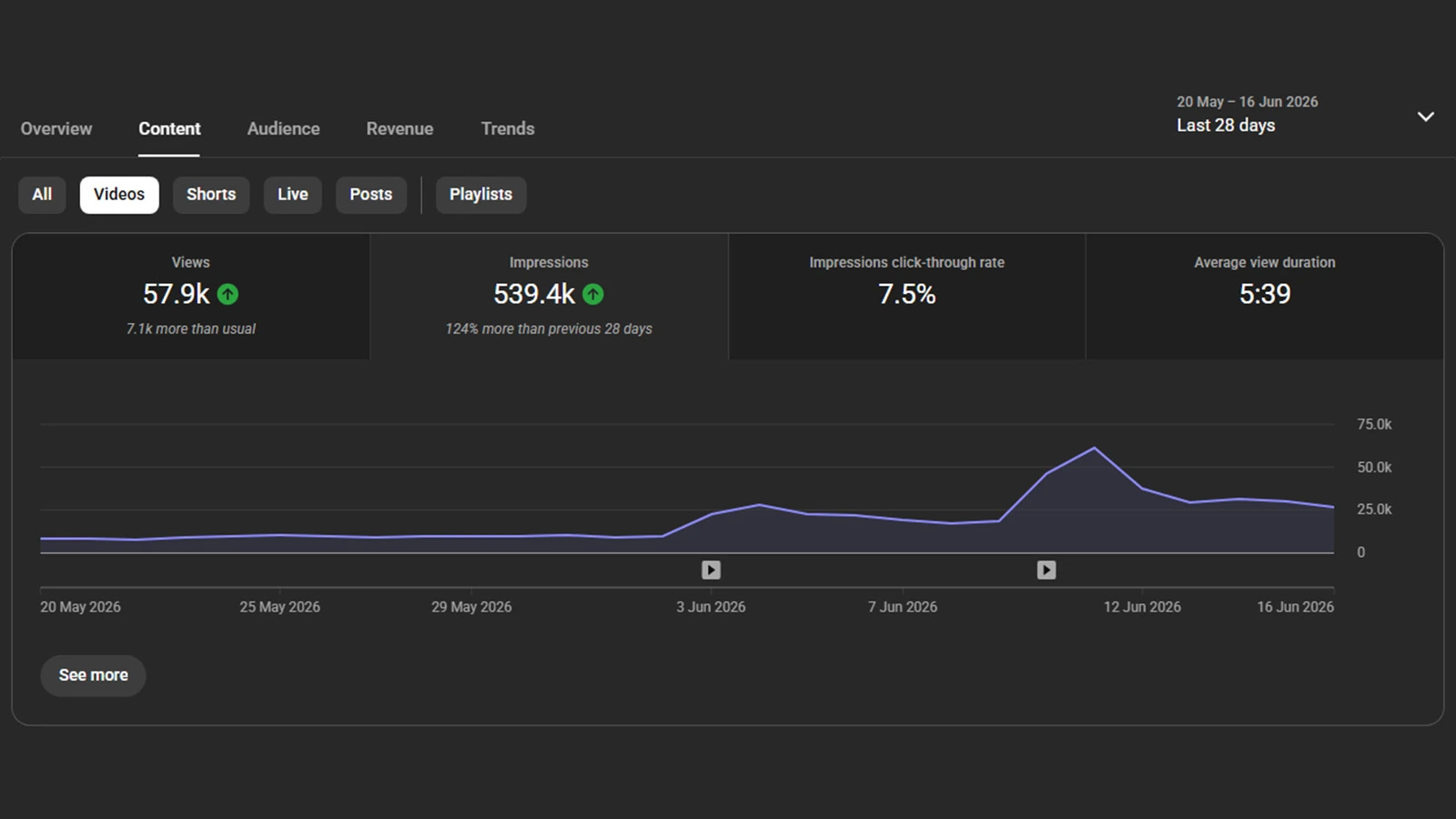
To learn more about how YouTube counts impressions, read the official YouTube impressions and click-through rate guide.
How YouTube decides who sees your video
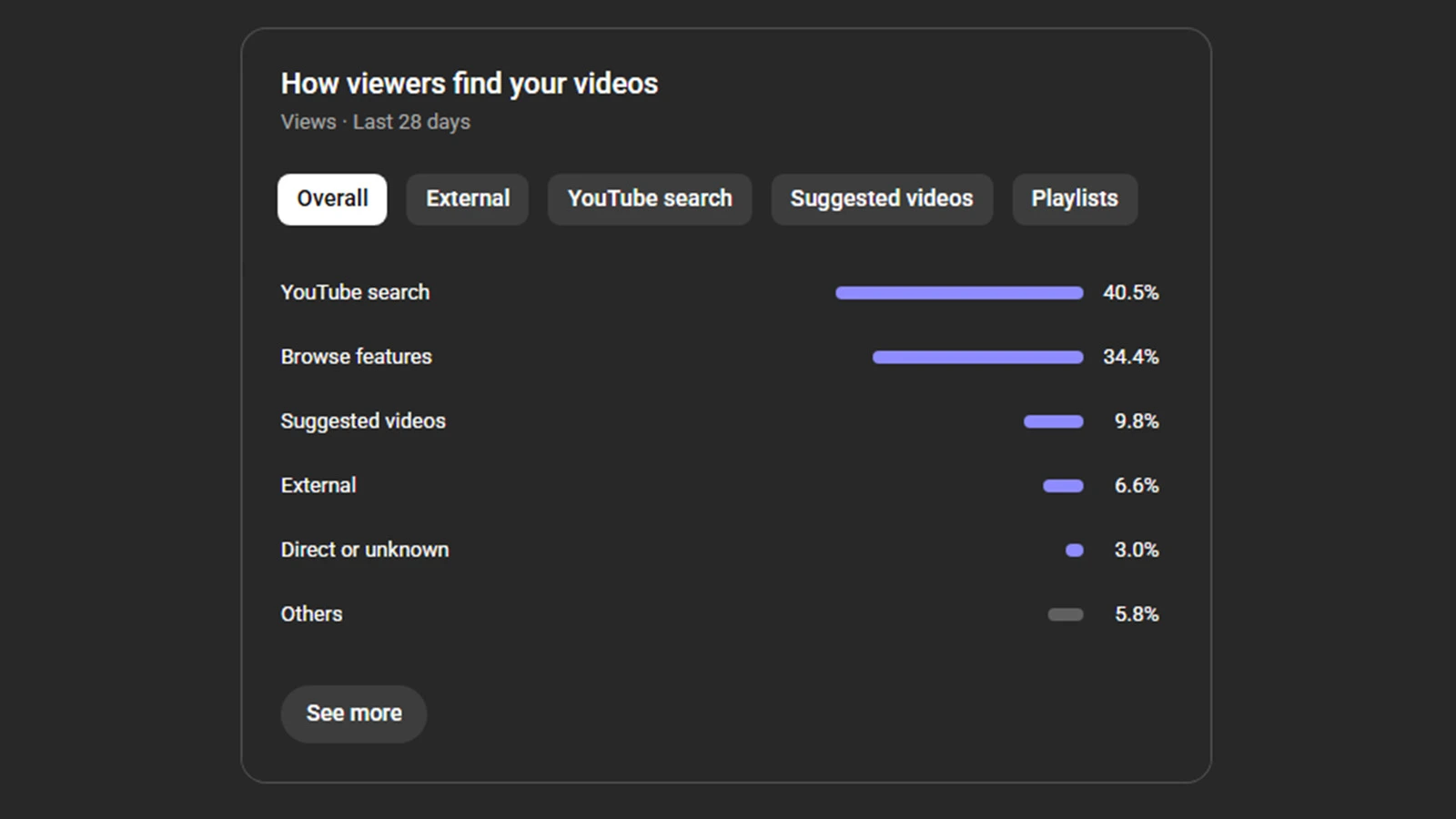
YouTube has several traffic sources, but for organic growth, two matter most: YouTube search and YouTube discovery.
YouTube search
This is when a viewer types a keyword into the search bar and your video shows up. These viewers are actively looking for an answer. That clear intent is why search traffic tends to produce higher click-through rates.
To grow through YouTube search, you need to target keywords that people are already searching for, with enough volume and low enough competition.
YouTube discovery
YouTube discovery covers browse features and suggested videos. This is when YouTube recommends your content based on viewer behavior on the platform. You are not waiting for someone to search for you. YouTube decides your video is a good match for a viewer and shows it to them.
To grow through discovery, you need ideas that align with what your audience wants to watch. When your content fits well, YouTube pushes it to more people.
Most channels grow through a mix of both. You can see your traffic split inside YouTube Studio under "How viewers find your videos."
For more on how YouTube measures reach, see YouTube's guide to understanding your video reach.
When impressions are the bottleneck
If you are getting fewer than 10,000 impressions per month, impressions are your bottleneck. YouTube is not sharing your content widely enough. Views will stay low until that changes.
At this stage, do not worry too much about titles and thumbnails yet. You do not have enough data to judge them properly. Fix reach first.
What to work on:
- For YouTube search: find keywords with higher search volume and lower competition
- For YouTube discovery: develop ideas that match your audience's interests so YouTube is more likely to recommend your content
Neither of these happens overnight. Search rankings take time to build. Discovery takes time too. Some videos start slow and pick up weeks or even months later. Keep publishing consistently while you improve.
What is a good click-through rate on YouTube?
Once you have enough impressions, look at your click-through rate. This tells you how often people click your video after seeing the thumbnail.
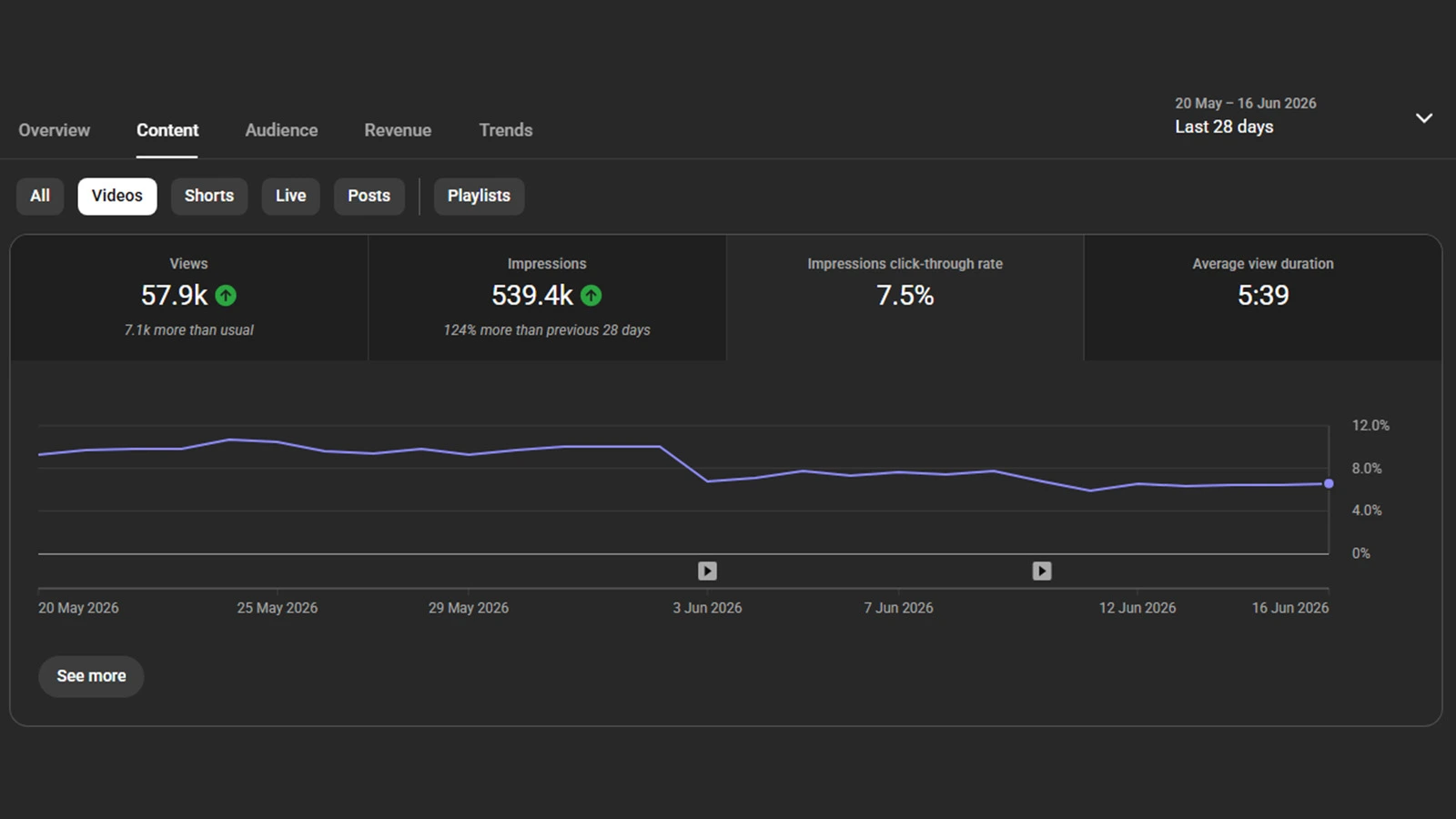
A good CTR depends on your main traffic source:
| Traffic source | Good CTR | Needs attention |
|---|---|---|
| YouTube search | 6% or higher | Below 3% |
| YouTube discovery | 3% to 6% | Below 2% |
| Suggested videos | 1% to 2% | Below 1% |
If your CTR is below these ranges, your title and thumbnail are not doing enough work.
The thumbnail is what stops someone from scrolling. It grabs attention first. The title then adds context and gives the viewer a clear reason to click. Both need to work together.
The balance between impressions and CTR
Impressions and CTR work against each other. When YouTube shows your video to a specific, targeted audience, CTR tends to be high but impressions stay lower. When YouTube shows it to a broader group, impressions go up but CTR comes down.
This is a balancing game. You are always pushing both numbers in the right direction. There is no perfect point. The goal is to improve both over time so your total view count grows.
How to find your bottleneck right now
Open YouTube Studio. Go to Analytics and look at your last 28 days. Check these three numbers in order:
- Impressions — is YouTube showing your videos enough?
- Click-through rate — are people clicking when they see your videos?
- Views — are clicks turning into watch sessions?
If impressions are low, that is your bottleneck. Work on reach.
If impressions are healthy but CTR is low, that is your bottleneck. Work on titles and thumbnails.
If both look reasonable but views are still low, look at retention next. Are people watching after they click?
Fix the weakest link first. Do not try to fix everything at once.
Find your YouTube bottleneck
Run the free Crescivo Bottleneck Calculator and find what to fix next.
Get Started FreeFAQ
Why are my YouTube videos not getting views?+
Views come after impressions and click-through rate. If either of those is weak, views stay low. Check your impressions first. If you are below 10,000 impressions per month, that is usually the bottleneck to fix.
What is a good number of impressions on YouTube?+
For a growing channel, aim for at least 10,000 impressions per month before you start judging your click-through rate. Below that, focus on improving reach through YouTube search or discovery.
What is a good YouTube click-through rate?+
It depends on your main traffic source. For YouTube search, 6% or higher is good. For YouTube discovery, 3% to 6% is typical. For suggested videos specifically, 1% to 2% is normal.
Why did my YouTube views suddenly drop?+
Usually because impressions dropped, CTR fell, or YouTube stopped recommending a video that was previously getting discovery traffic. Go to YouTube Studio and check which metric changed first.
Should I focus on YouTube search or YouTube discovery?+
Most channels benefit from both. Search brings in viewers who are actively looking. Discovery brings in viewers YouTube thinks will enjoy your content. Check your traffic source breakdown in YouTube Studio to see where most of your views are already coming from.
What to do next
Find your weakest number, impressions or click-through rate, and focus there first. One bottleneck at a time.
Find Your Biggest YouTube Bottleneck
Most creators guess what to fix. Run the free Channel Bottleneck Calculator and discover the one metric holding back your growth.
Run Free AnalysisRelated Articles
More guides to help you diagnose and improve your YouTube growth.
YouTube Growth
How to Get Your First 100 YouTube Subscribers
Getting your first 100 YouTube subscribers puts you in the top 25% of all channels. Here is how to get there through search, discovery, and the right content strategy.
YouTube Analytics
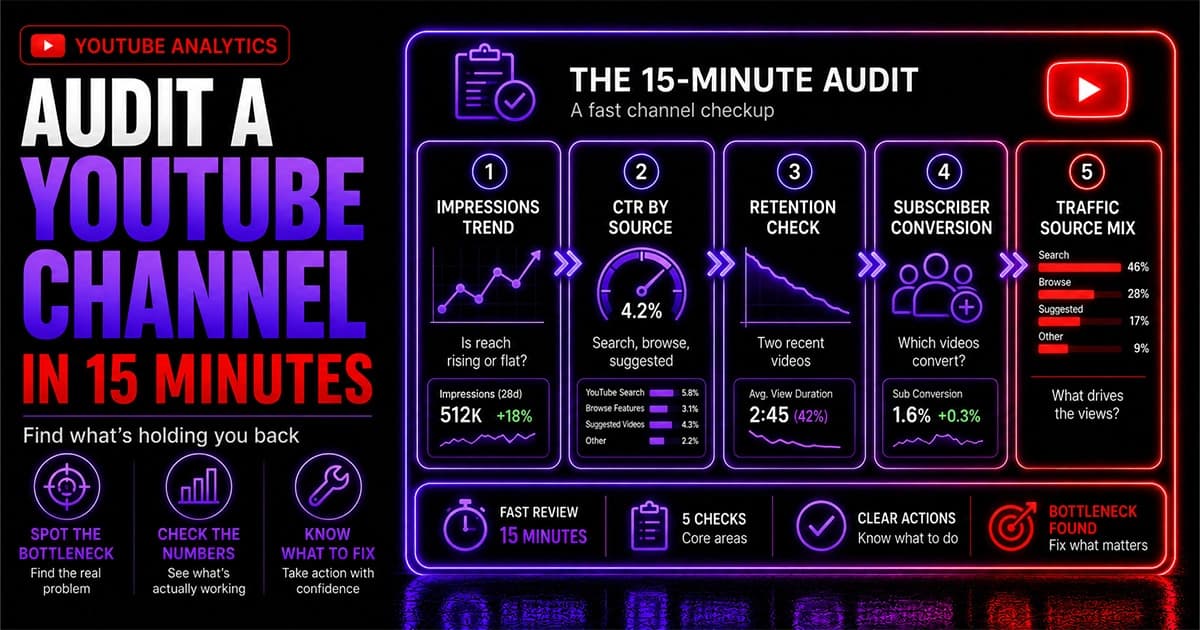
How to Audit a YouTube Channel in 15 Minutes
You do not need hours to know if your YouTube channel has a problem. Here is a focused 15-minute audit that tells you exactly where to look and what the numbers mean.
YouTube Strategy
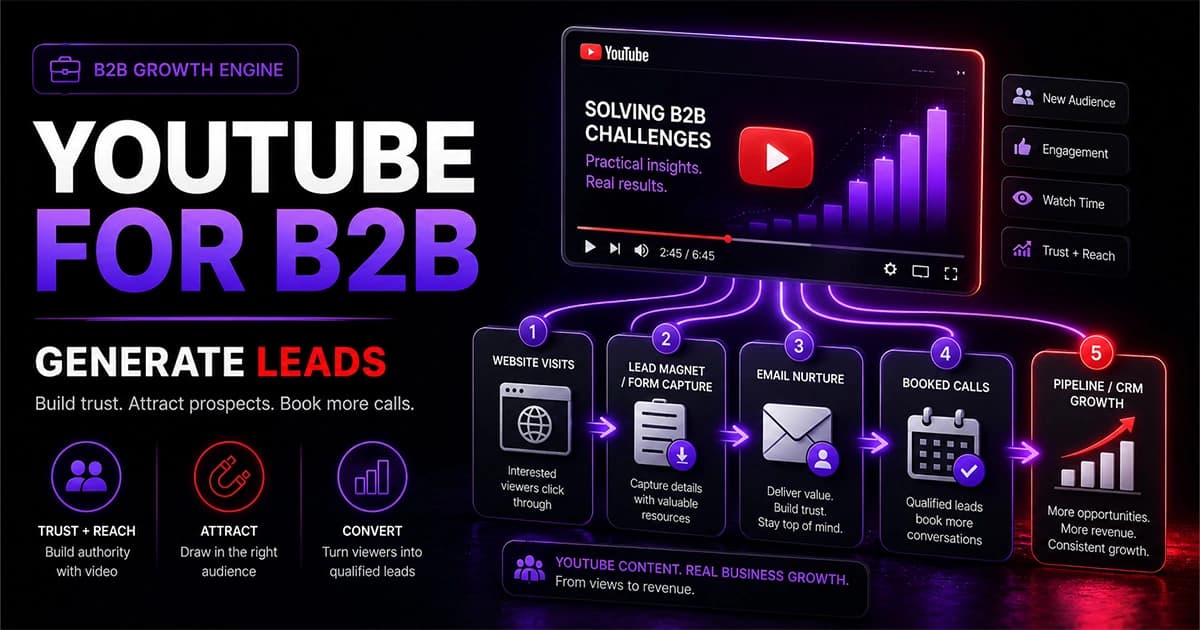
YouTube for B2B: How Businesses Use the Platform to Generate Leads
B2B businesses do not need millions of views to get results from YouTube. Here is how the platform builds trust, drives leads, and keeps you top of mind with buyers.
Find Your Biggest YouTube Bottleneck
Most creators guess what to fix. Run the free Channel Bottleneck Calculator and discover the one metric holding back your growth.
Run Free Analysis